Measurements to Check Before Ordering Patio Dining Tables
Before ordering patio dining tables, the most useful preparation is a few careful measurements. Outdoor furniture has to work in a looser space than indoor furniture. Doors, planters, umbrellas, steps, pool edges and walking routes all shape what fits comfortably. A table that looks right in a showroom can feel cramped on a small terrace, while a compact set can look lost on a broad deck. The goal is not only to make the furniture fit, but to make everyday use feel easy.
Start with the area where the table will sit. Measure the length and width of the clear space, then mark a generous boundary around it. Allow room for chairs to pull back, for people to pass behind seated guests and for any nearby wall or railing. A dining set needs more room than its tabletop alone suggests. If the space serves more than one purpose, such as dining and lounging, sketch a simple layout before choosing a shape.
Measure the usable dining zone
The first figure to check is the flat, usable footprint. Patios are rarely perfect rectangles. A raised border, a drain, a corner planter or a sloping paver can reduce the practical area. Measure at the widest and narrowest points, and note any obstacles that interrupt the space. For patio dining tables, a round top can soften tight corners and make movement around the edge simpler. A rectangular top often suits long balconies or wall-side dining, but it needs clearer access at the ends.
Leave space for movement. A chair pushed under the table takes far less room than a chair in use, so measure the open area as if the table were occupied. Think about the path from the house to the seating area, too. If people must squeeze past a chair to reach a door, the set may technically fit while still feeling awkward. Outdoor resin furniture is often chosen for practical reasons, but comfort still depends on the space around it.
Check table height against the chairs
Table height matters because it affects posture, legroom and how well chairs tuck away. Standard dining-height sets work with dining-height chairs. Counter-height and bar-height sets need taller stools and more careful placement, especially on a balcony or near a low rail. Mixing heights may look interesting, but it rarely improves comfort at mealtimes.
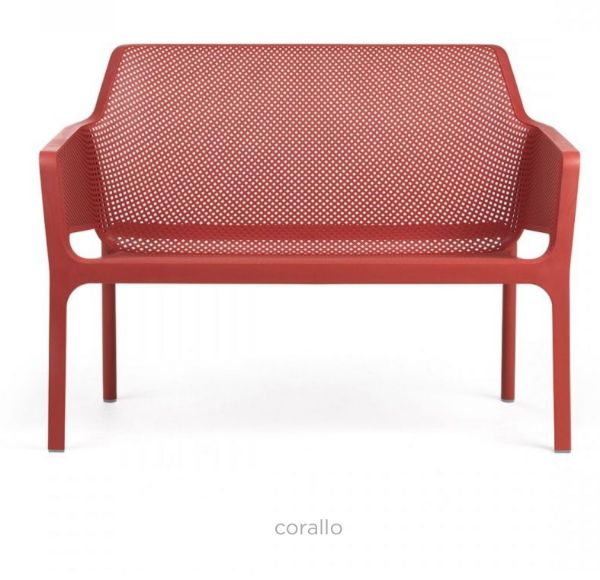
Write down the table height, chair seat height and overall chair height before ordering. Chair dimensions are easy to overlook when a set is viewed as a single package. Armrests should slide under the tabletop if the design allows it, or sit clear of the apron. If chairs have fixed arms, check the gap between the table edge and the support legs. A close fit can make seating feel cramped even when the tabletop itself is wide enough.
Allow space per seated guest
A table size should match the number of people who will normally use it. Allow enough width for each place setting, elbows and serving dishes. A table that seats six only on paper may feel tight once plates, glasses and a centerpiece are added. On the other hand, a very large table can dominate a small patio and leave little room for pulling chairs back.
Consider how often the set will host extra guests. Extending tables offer flexibility, but they need storage space for the leaves and a clear process for opening them. Fixed tables are simpler and often steadier. Resin material can be a practical choice in outdoor settings because it suits a range of patio, pool, garden and commercial areas, yet the shape and size still need to match the room available.
Confirm delivery access and placement
Ordering furniture involves more than the final position. Check the route from the delivery point to the patio. Gate widths, narrow side passages, steps, tight turns and low overhead clearance can all affect larger pieces. Measure the narrowest opening the table and chairs must pass through, then compare it with packaged dimensions where available. Flat packed or stackable chairs may be easier to move through tight access points than fully assembled pieces.
Also think about where the furniture will rest once assembled. A heavy tabletop is less troublesome if it is positioned before nearby planters or accessories fill the space. Poolside layouts need clear walking routes and enough separation between dining chairs and wet deck areas. Commercial spaces may need an even clearer path for staff and visitors. A few minutes spent checking access can prevent the frustration of a set that arrives but cannot reach its intended spot.
Look at storage and stacking needs
Storage is easy to forget until the furniture needs to be moved, covered or put away for a season. If chairs will be stacked, check stacked height and whether they nest securely. Stackable chairs are useful where space is limited, but the design should suit the way they will be handled. Lightweight pieces are easier to move, though they may need more care in windy spots.
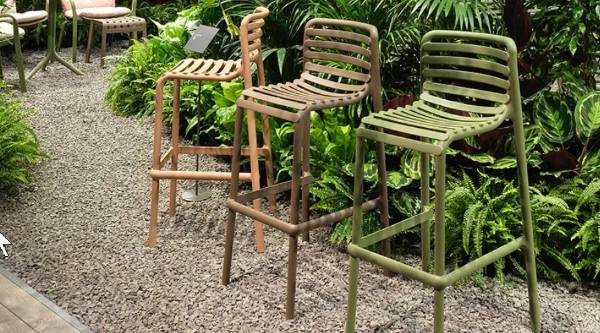
Cover storage is another practical detail. Even when furniture is designed for outdoor use, covers can extend its tidy appearance during harsh weather. Measure the full set with chairs pushed in, then add a little allowance for a cover that can be fitted and removed without strain. easy care outdoor seating can reduce day-to-day fuss, but it still benefits from sensible placement and a clear storage plan.
Think about comfort in real use
Dimensions tell only part of the story. Seat comfort depends on seat depth, back angle, arm height and the space between the chair and table edge. A shallow seat may feel upright and tidy, while a deeper seat can feel relaxed but take more room to use. If a chair has a slatted or molded surface, consider how it feels for longer meals rather than a quick glance.
Weather resistance also shapes the choice. Outdoor resin furniture is often selected for areas exposed to sun, rain and poolside splashes, but placement still matters. A sheltered corner may feel more comfortable on hot days, while an open deck may dry faster after rain. Check whether cushions are part of the plan, because they add comfort but also need drying time and storage space. easy care outdoor seating works best when the furniture matches the way the area is actually used.
Match the shape to the setting
Round tables encourage conversation and make it easier for people to move around the edge. Rectangular tables suit formal dining and long spaces. Square tables can work well for small groups and tight corners, but they may feel close for larger place settings. Oval designs offer a softer look and can fit narrow areas where a rectangle feels severe.
Patio layout should guide the decision. A table near a wall may benefit from a rectangular shape, while a table in the center of a terrace often works better with a round top. Umbrella holes, parasol bases and nearby heaters can change the useful surface area. If an umbrella is planned, check that the base will not block chairs or create a tripping zone. The table should support the setting, not force everything else to move around it.
Check maintenance before the order is placed
Maintenance needs are part of fit, even though they are not measured in inches. Furniture placed under trees may collect leaves and sap. Poolside pieces may encounter sunscreen, chlorine or salt. Garden dining areas may deal with soil, pollen and moisture. A surface that is simple to wipe is more useful when it is easy to reach from all sides.

Leave enough clearance around the set for cleaning. If a table is pushed against a wall or railing, dirt can collect in the gap. Chairs with open backs or simple frames may be easier to rinse and dry than intricate designs. This is where practical measurements and everyday habits meet. A dining area that allows easy movement will also be easier to keep tidy.
Put the numbers together
Once the measurements are gathered, compare them with the dimensions of the table and chairs as a complete set. Check the tabletop size, table height, chair width, chair depth, seat height and overall chair height. Then review the space needed for movement, delivery access, storage and cleaning. The best choice is usually the one that leaves the patio feeling calm rather than crowded.
Patio dining tables should make meals outdoors feel straightforward. Careful measurements help avoid the common problems of tight seating, blocked pathways, awkward delivery and furniture that overwhelms the space. A clear plan also makes it easier to choose between shapes, heights and chair styles. When the dimensions suit the setting, the furniture can settle into daily use without constant rearranging.